
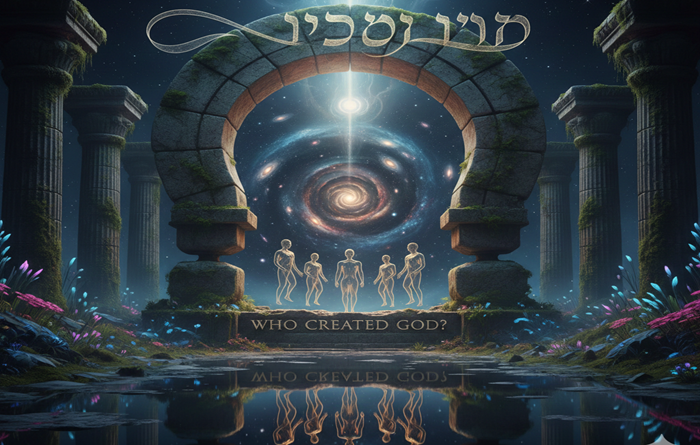
Who Created God? The Logic Behind Eternal Foundation
Who created God? This is perhaps one of the most profound questions ever asked, often posed by children with honest curiosity and by skeptics as a challenge to faith. It’s a question that deserves our thoughtful attention, for in wrestling with it, we discover something magnificent about the nature of our Creator.
The Eternal Foundation
When we open Scripture, we encounter an immediate and stunning declaration: “In the beginning God created the heavens and the earth” (Genesis 1:1). Notice what this verse doesn’t say. It doesn’t explain where God came from. It doesn’t justify God’s existence. It simply begins with God as the foundational reality from which everything else flows.
This isn’t an oversight or weakness in Scripture—it’s a revelation of profound truth. God exists outside the category of created things. He is, as theologians say, the “uncaused cause,” the one being who requires no explanation beyond Himself.
Beyond Time’s Reach
Our minds are imprisoned by time. We think in terms of before and after, cause and effect. Everything in our experience has a beginning. But God exists beyond time itself. As Psalm 90:2 declares, “Before the mountains were brought forth, or ever you had formed the earth and the world, from everlasting to everlasting you are God.”
The question “Who created God?” assumes that God is subject to the same rules as creation. But God is not a creature. He is the Creator. Time itself is part of His creation, which means God exists in an eternal present, without beginning or end.
The Self-Existent One
When Moses encountered God at the burning bush and asked for His name, God replied with a mysterious answer: “I AM WHO I AM” (Exodus 3:14). This name reveals God’s nature—He is self-existent, dependent on nothing outside Himself for His being. While we exist contingently, meaning we depend on oxygen, food, and countless other factors, God exists necessarily. His very nature is to be.
Jesus echoed this divine claim when He declared, “Before Abraham was, I am” (John 8:58). Not “I was,” but “I am”—the eternal present tense of deity.
The Logic of Origins
Consider this: if everything must have a creator, then God’s creator would need a creator, and that creator would need a creator, stretching backward infinitely. This creates an impossible logical regress. There must be an uncaused first cause, or nothing could exist at all.
God is that necessary foundation. As Paul proclaimed in Athens, He is the one “in whom we live and move and have our being” (Acts 17:28). He doesn’t just start the chain of existence—He sustains it moment by moment.
The Proper Response
When Job questioned God’s ways, God responded not with philosophical arguments but with a revelation of His transcendence: “Where were you when I laid the earth’s foundation?” (Job 38:4). The answer to “Who created God?” is ultimately this: God is in a category all His own.
This should evoke in us not frustration but worship. We serve a God who is truly other, truly infinite, truly beyond our complete comprehension. As Isaiah 55:8-9 reminds us, “My thoughts are not your thoughts, neither are your ways my ways, declares the Lord.”
Conclusion
The question “Who created God?” reveals our human limitations while pointing us toward divine majesty. God needs no creator because He is the source of all existence, the Alpha and Omega, the beginning and the end. Rather than stumbling over this mystery, let us bow before it in wonder. Our God is great enough that we cannot fully grasp Him, yet near enough that we can know Him and be known by Him.